
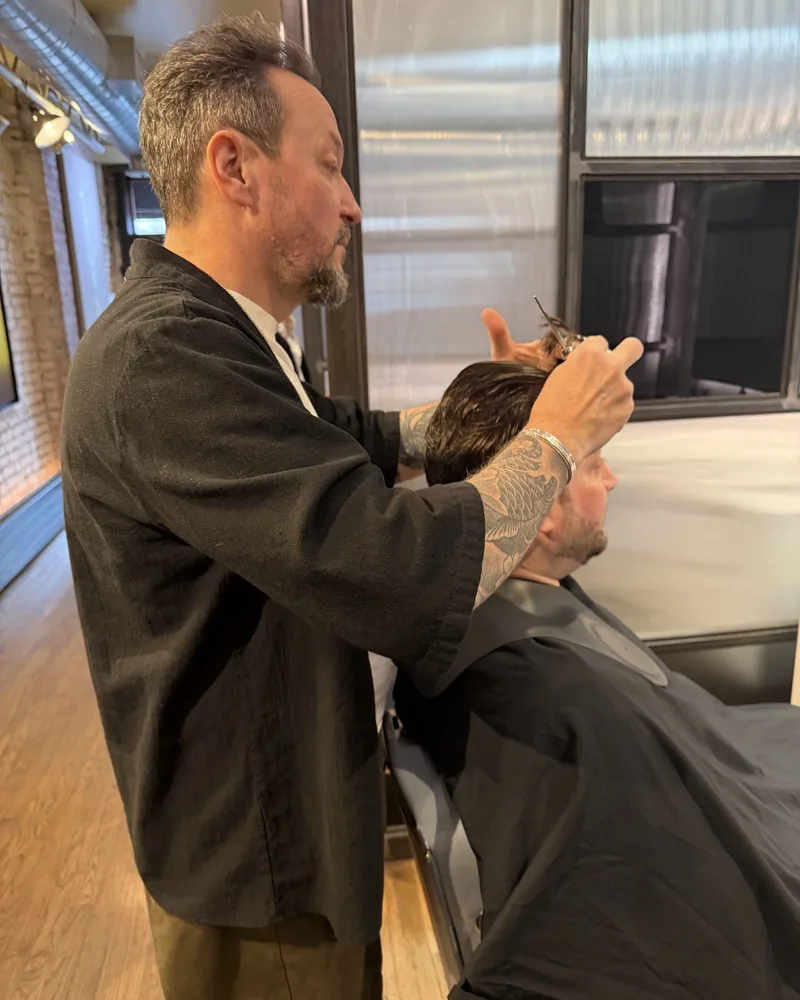
The short answer
Blend it at the edges rather than dyeing it flat. A partial color at the hairline, temples and sideburns keeps the variation your hair already has — and variation is the thing that makes color look like hair instead of paint.
If you have already tried a box color and it read wrong, the shade was probably not the problem. Uniformity was.
Where gray actually shows first
Not evenly across the head. Gray arrives at the edges first.
The hairline at the front, the temples, the sideburns and the neckline are where it is noticed — partly because those hairs are the ones that sit against the skin, and partly because they are the ones other people are facing. The crown usually lags by years.
That pattern is the whole argument for a partial application. An all-over process colors the crown, which was still dark, in order to reach the hairline, which was not. You end up paying to change the part nobody was looking at, and the part that matters ends up flatter than the rest.
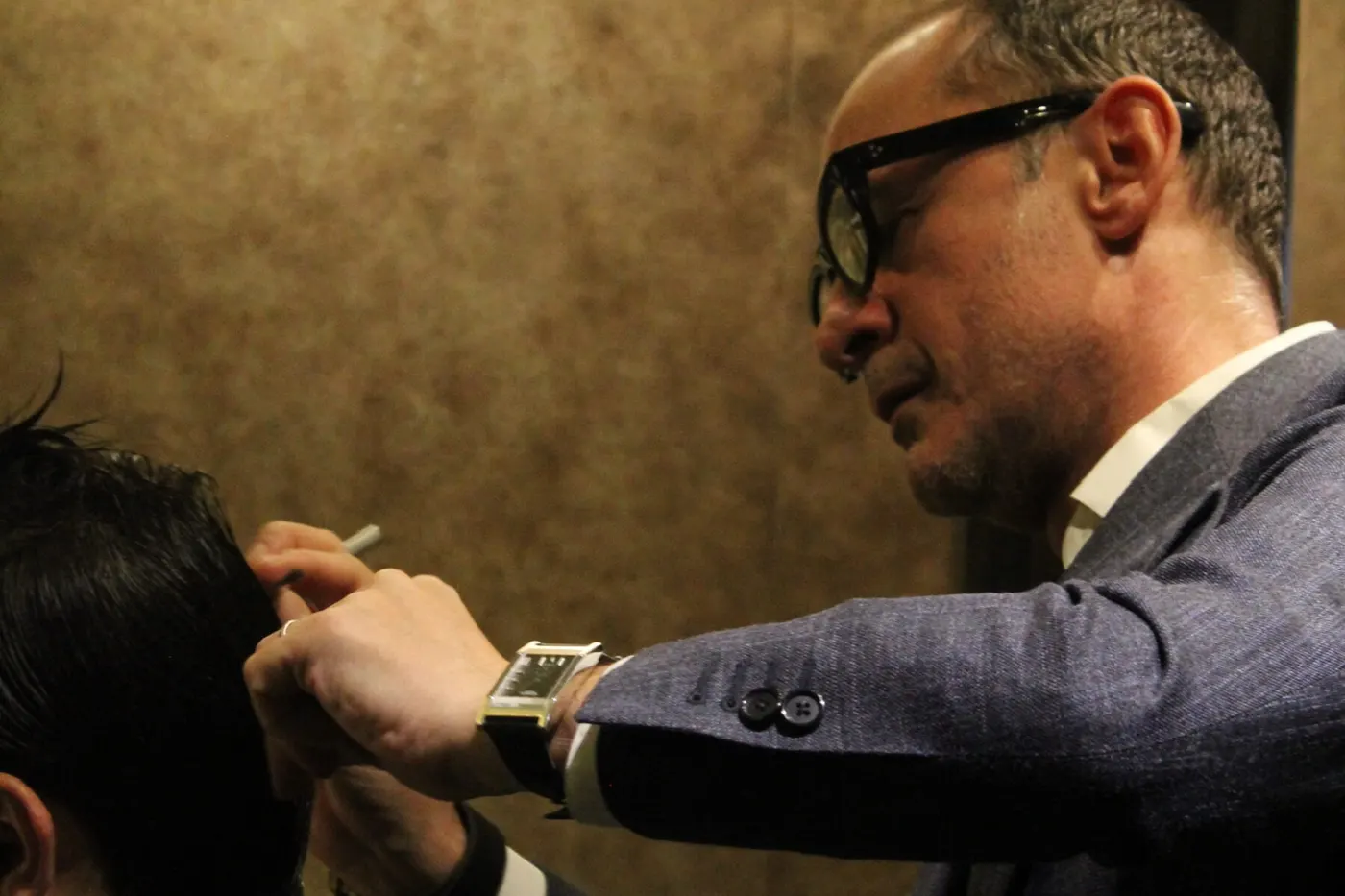
The difference
Color that reads natural is never one tone. It is the same tone, varied.
Martial Vivot
Why a flat color reads fake
Real hair is not one color. It is lighter where the sun reaches it, darker underneath, warmer at the ends, and it shifts as it turns around the head. A single-tone application removes all of that in one pass.
Then there is the line. Color sits on the hair; the scalp keeps producing hair that does not have it. Within a couple of weeks the contrast at the roots is visible, and it is a hard edge — a straight frontier between treated and untreated that no natural head has. Blending softens that frontier because there is less contrast to reveal.
The third tell is the beard. A man will color his hair and leave a gray beard, and the two read as separate decisions made by different people. They are on the same face, so they have to be answered together.
The two ways to do it
Both are on the menu, both are short, and they answer different questions.
How it grows out
Color does not fade off; hair grows out. What appears at the scalp after a few weeks is new hair that never received any color, which is why the regrowth line is sharp and why the interval is set by your growth rather than by the product.
This is the practical argument for taking the color with the haircut. The hairline and the neckline are cut in the same visit that blends the color into them — and a haircut that sharpens those two lines makes a soft regrowth line far less noticeable.
It is also the argument against doing it at home. A box color cannot be confined to the edges, and the edges are the entire point.
What to say at the chair
Say what you want to see less of, not which shade you want. “I want the gray at the front softened, not covered” and “I don’t want to look like I’ve had it done” are both precise instructions; a color name is not.
If you have colored it before and disliked the result, say so, and say what you disliked — the tone, the flatness, or the regrowth line. Each of those has a different fix, and none of them is a different shade. See also the gray blending service and the neckline guide for the line that shows first.
Questions
Can you cover gray hair without dyeing it?
Covering is the wrong frame — blending is the right one. A partial color deposits tone only where the gray actually shows: the hairline, the temples, the sideburns and the neckline. The gray reads as depth and light rather than as a block of color, which is the difference between hair that looks older and hair that looks painted.
What is the difference between gray blending and hair color?
A partial color is a blend: it works on the edges of the head where gray appears first, and it leaves the rest of your hair alone. A single process is a one-tone all-over color. Both are on the menu and both take about half an hour, but they solve different problems — blending keeps variation, an all-over process replaces it.
How often does gray blending need refreshing?
It grows out rather than fading out. What you see after a few weeks is new hair at the scalp, not color washing away, so the interval is set by your own growth and by how visible a regrowth line bothers you. Most guests take it with the haircut, because the two lines that show first — the hairline and the neckline — are cut in the same visit.
Will it look natural?
It looks natural when variation survives. Hair is never one color: it is lighter at the front, darker at the crown, and it shifts as it turns around the head. A flat, single-tone application erases exactly that variation, and that is what people read as dyed — not the shade, the uniformity.
Can you color the beard as well as the hair?
Yes, and it is usually the beard that ages a man first. Beard color is a separate service on the same visit, because the beard grows at a different rate and reads against the skin rather than against the hair.
Book
Choose your salon to book online.